
What this chapter covers
- The judicial branch of the U.S. government.
- The Supreme Court and the lower federal courts.
- How federal judges are chosen.
- How the courts review laws.
The judicial branch
The judicial branch is one branch of the U.S. government. The parts of the judicial branch are the Supreme Court and other federal courts. The other federal courts are sometimes called lower federal courts.
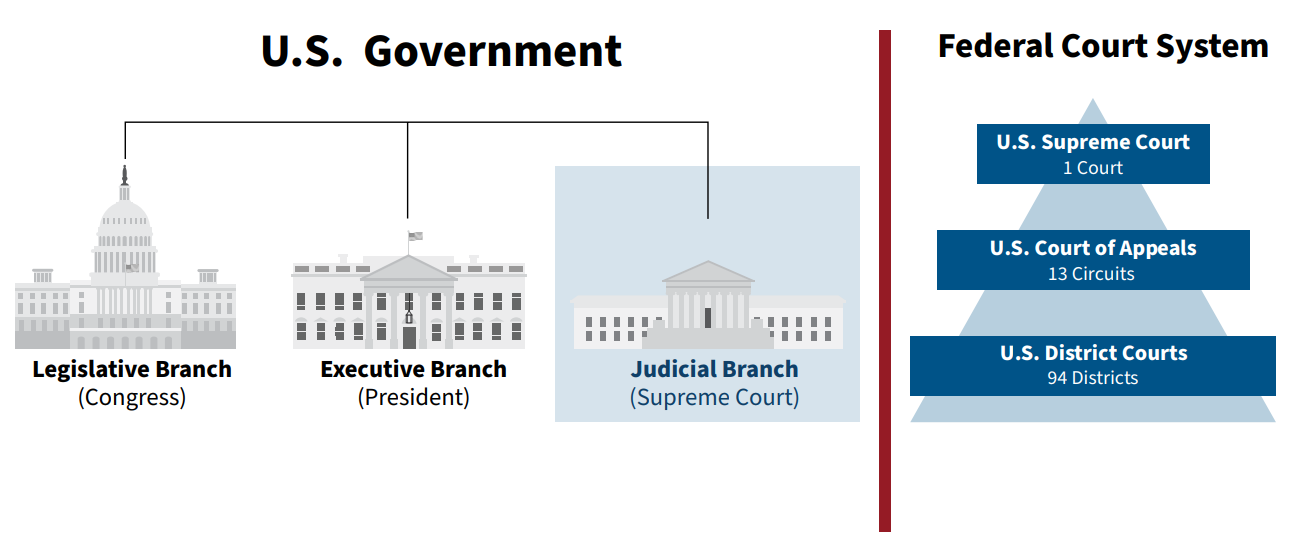
The Supreme Court is the highest court in the United States. This means that the Supreme Court’s decision about a law or legal case is final.
When the Founders wrote the Constitution, they did not want the judges who serve on the Supreme Court and on other federal courts to make decisions about the law based on politics or elections. Judges who serve on these courts are sometimes called federal judges. The Founders wanted federal judges to make decisions based on the Constitution and the rule of law. This is why federal judges are not elected to office. Federal judges serve for life, which helps them stay independent of politics.
How federal judges are chosen
The President nominates someone to become a federal judge on the Supreme Court or on a lower federal court. That person must also be approved by the U.S. Senate to become a federal judge.
The process for a person to become a federal judge is an example of the separation of powers of government because all three branches of government are involved. The separation of powers is important because it stops one branch of government from becoming too powerful.
Reviewing laws
One of the important roles of the judicial branch is to review laws. This means that the courts can decide if a law follows the Constitution. In the United States, the Constitution is the supreme law of the land, so everyone in the United States must follow it, and the laws that Congress writes must follow it too.
If someone in the United States thinks that a law does not follow the Constitution, that person can bring a legal case to a federal court to challenge the law.
Each of the courts in the judicial branch can only review a law if there is a legal case before it. This means that the Supreme Court and the lower federal courts can only make a decision about a law or a legal case when they have the legal authority to hear a case that is brought before the court.
The Supreme Court may review a decision about a law or legal case from a lower federal court. If the Supreme Court reviews a decision, then it must make a decision. There are no other courts in the United States that can change the decision of the Supreme Court. This is one reason that the Supreme Court is the highest court in the United States.
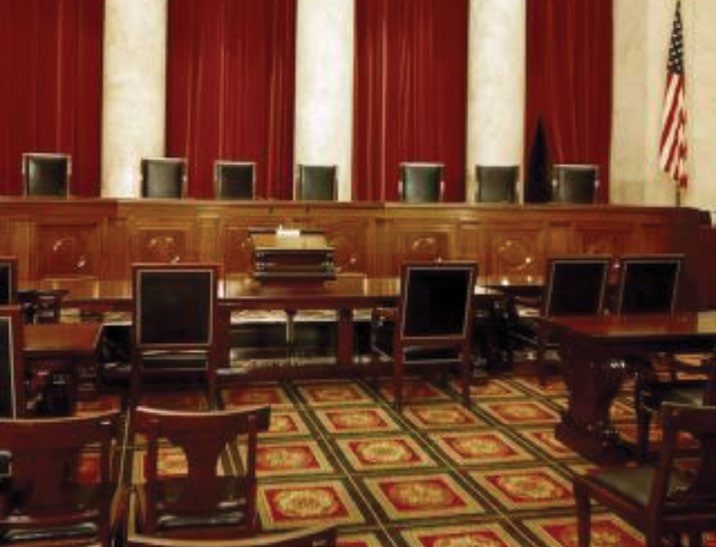
The Supreme Court justices
There are nine justices on the Supreme Court. The word “justice” is another word for “judge.” After the Supreme Court reviews a case, the justices meet to discuss the case and vote on the decision.
One justice on the Supreme Court is called the Chief Justice of the United States. The Chief Justice has many duties. Some of the duties are:
- Leading the other Supreme Court justices in choosing which cases to hear.
- Managing the courtroom when the Supreme Court is hearing a case.
- Leading discussions with other Supreme Court justices about deciding a case.
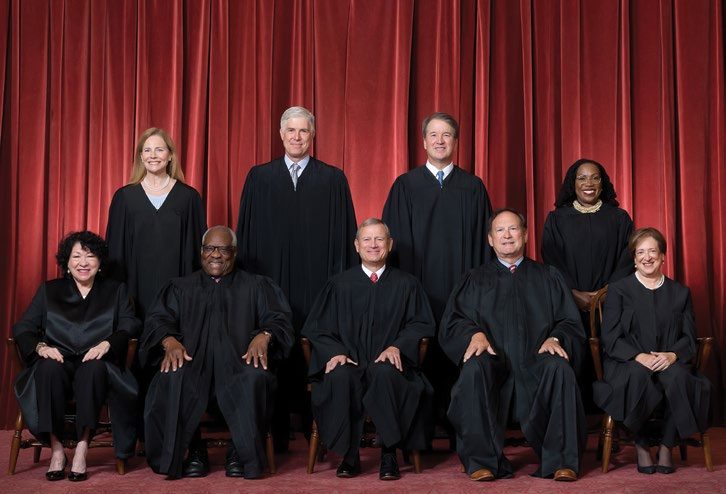
The Chief Justice serves as a leader on the Supreme Court, but the justices make their own decisions when voting on each case. When a majority of the justices vote the same way on a case, they write a decision that explains their reasons.
A majority means that more than half of the justices vote the same way on a case. For example, when nine Supreme Court justices hear a case, at least five justices must vote the same way in order to have a majority.
To find the name of the current Chief Justice of the United States, visit supremecourt.gov/about/justices.aspx.
What to remember
- The judicial branch includes the Supreme Court and the lower federal courts.
- The Supreme Court is the highest court, and no other court can change its decisions.
- Courts review laws, explain laws, resolve disputes, and can decide that a law goes against the Constitution.
- Federal judges are nominated by the President and approved by the Senate.
- The Supreme Court has nine justices, and at least five must agree to decide a case.
- Justices serve for life so that they can be independent of politics.