
What this chapter covers
- The Bill of Rights.
- The rights and freedoms of everyone living in the United States.
- The responsibilities of people living in the United States.
- The rights and responsibilities of U.S. citizens.
Rights and freedoms
Under our Constitution, individuals living in the United States have rights or freedoms. The word “freedom” is another word that means “right.” Some rights belong to everyone living in the United States, and some rights only belong to U.S. citizens.
After the Constitutional Convention, the people of the United States had to approve the Constitution. Many people in the country did not like the Constitution in 1787 because it did not include a list of rights.
Some of the Founders who were at the Constitutional Convention began to write essays called the Federalist Papers. The Federalist Papers supported the passage of the U.S. Constitution. The writers of the Federalist Papers were James Madison, Alexander Hamilton, and John Jay. The Federalist Papers included 85 essays about the Constitution, and they were printed in newspapers between October 1787 and May 1788. All of the writers signed the essays with the name “Publius.”
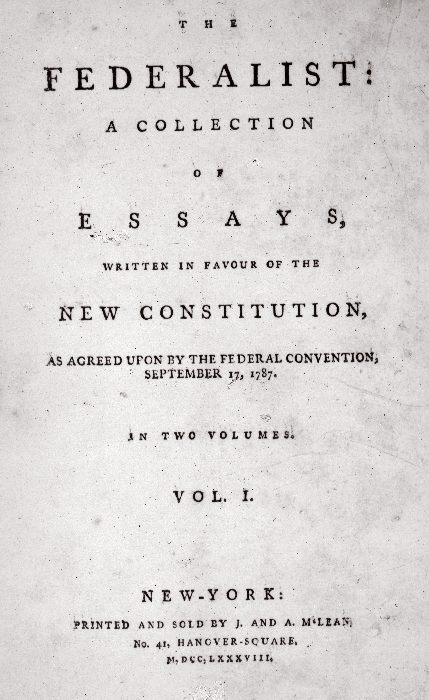
The people who supported the Constitution agreed to add amendments to the Constitution that included a list of rights. An amendment is a change to the Constitution. Once the supporters of the Constitution agreed to add a list of rights, many more people in the United States decided to support the Constitution.
In 1791, the first 10 amendments were added to the Constitution. They include some of the basic rights of U.S. citizens and individuals living in the United States. The first 10 amendments to the Constitution are called the Bill of Rights.
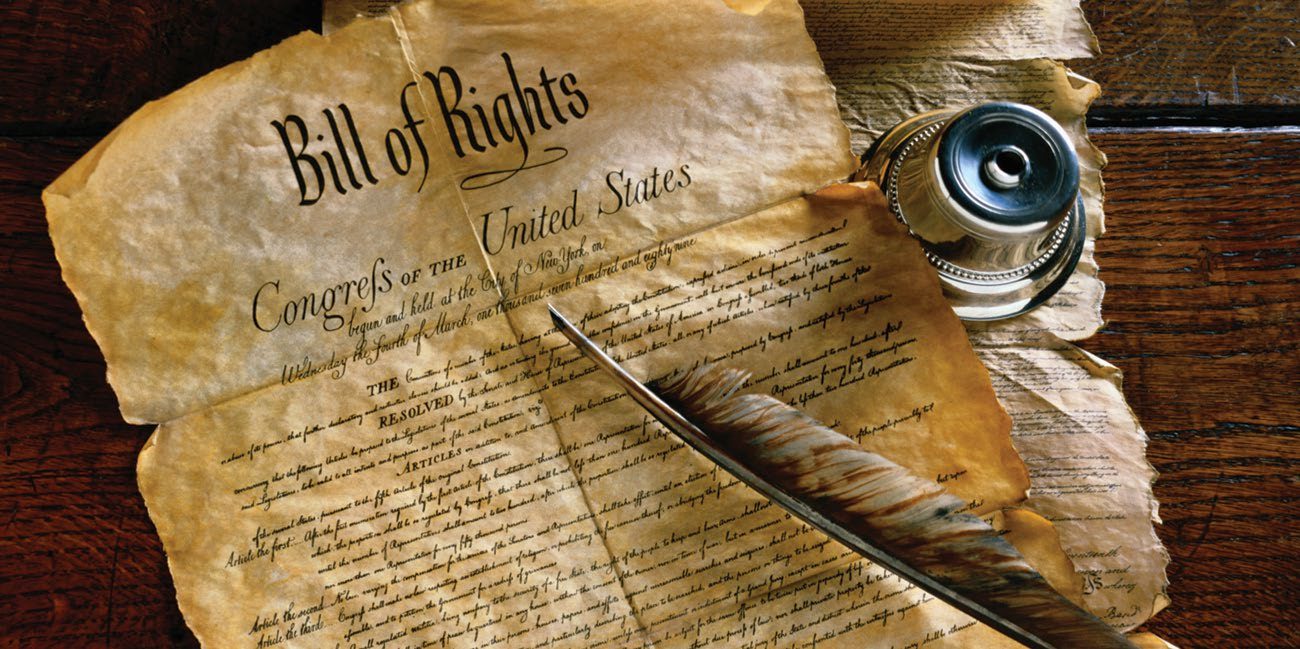
Rights of everyone living in the United States
There are five rights or freedoms in the First Amendment. They are rights of everyone living in the United States:
- Speech.
- Religion.
- To assemble (gather).
- The press (media).
- To petition (write to) the government.
One right or freedom in the First Amendment is freedom of speech. People in the U.S. have the right to say or write what they want without fear of going to jail. People can use their freedom of speech to participate in American democracy. For example, people can write to a newspaper or publicly give their opinion about an issue or policy.
Another right or freedom in the First Amendment is freedom of religion. People in the U.S. have the right to practice any religion, or not practice a religion.
The other amendments in the Bill of Rights list other types of rights. For example, the Sixth Amendment lists some of the rights for people who have been accused of breaking the law. The Sixth Amendment says that a person accused of breaking the law has the right to a trial with a jury to decide if that person is innocent or guilty.
Responsibilities of people living in the United States
Everyone living in the United States is responsible for following the rule of law. This means that everyone living in the United States must obey the law.
For example, it is the law that everyone living in the United States must pay income taxes. The law says that each year, people are required to send in a federal income tax form to the U.S. government. The last day that people can send in their federal income tax forms is April 15.
Another responsibility for men who are U.S. citizens or legal permanent residents is to register for the Selective Service. All men who are U.S. citizens or legal residents and between the ages of 18 and 26 must register for the Selective Service.
Voting in federal elections
In the United States, voting in federal elections is a right and a responsibility that is only for U.S. citizens. Participating in federal elections is how U.S. citizens vote for U.S. representatives, U.S. senators, and the President.

There are four amendments to the Constitution about who can vote in federal elections. These amendments say:
- Citizens 18 and older can vote.
- You do not have to pay a poll tax to vote.
- Any citizen can vote; women and men can vote.
- A male citizen of any race can vote.
Currently, U.S. citizens 18 and older can vote in federal elections.
Beyond voting, people participate in civic life by joining a civic group, contacting their elected officials, or writing to a newspaper. Americans also serve their country by serving in the military, working for the government, or volunteering in their communities.
Naturalization and U.S. citizenship
The United States has welcomed immigrants from all over the world who have helped shape and define our country.
When applicants for naturalization take the Oath of Allegiance, they make important promises of loyalty to the United States. The promises that applicants make when they become United States citizens are to:
- Give up loyalty to other countries.
- Defend the Constitution and laws of the United States.
- Obey the laws of the United States.
- Serve in the U.S. military if needed.
- Serve the nation by doing important work if needed.
- Be loyal to the United States.


During the naturalization ceremony, applicants raise their right hand and say the Oath of Allegiance. At that time, they become U.S. citizens. Naturalization is one way that a person can become a U.S. citizen. Other ways include being born in the United States, under conditions set by the 14th Amendment, and deriving citizenship under the conditions set by Congress.
To become a naturalized U.S. citizen, a person must
- Be 18 years old.
- Be a lawful permanent resident.
- Submit an application for naturalization with fees.
- Meet the residence and presence in the U.S. requirements.
- Be a person of good moral character and show attachment to the principles and ideals of the U.S. Constitution.
- Be able to read, write, speak, and understand English, and have knowledge and an understanding of U.S. history and government.
- Complete the naturalization test and interview process.
- Attend a naturalization ceremony and take the Oath of Allegiance.
To learn more about eligibility and the process, visit uscis.gov/naturalization-eligibility.
What to remember
- The first 10 amendments are the Bill of Rights.
- The First Amendment protects speech, religion, assembly, the press, and the right to petition the government.
- Everyone living in the United States must obey the law and pay taxes.
- Americans participate in civic life by voting, contacting officials, joining civic groups, and serving their country.
- Men 18 through 25 must register with the Selective Service.
- Only U.S. citizens can vote in federal elections; citizens 18 and older can vote.
- New citizens promise loyalty and agree to defend the Constitution and obey U.S. laws.