
What this chapter covers
- The U.S. Constitution.
- When the Constitution was written.
- What the Constitution says.
- Why the Constitution is the most important document in the United States government.
The Constitution and the Founding Era
The U.S. Constitution was written in 1787. It is the oldest written constitution in the world. The Constitution sets up the government and enshrines the basic rights of the American people.
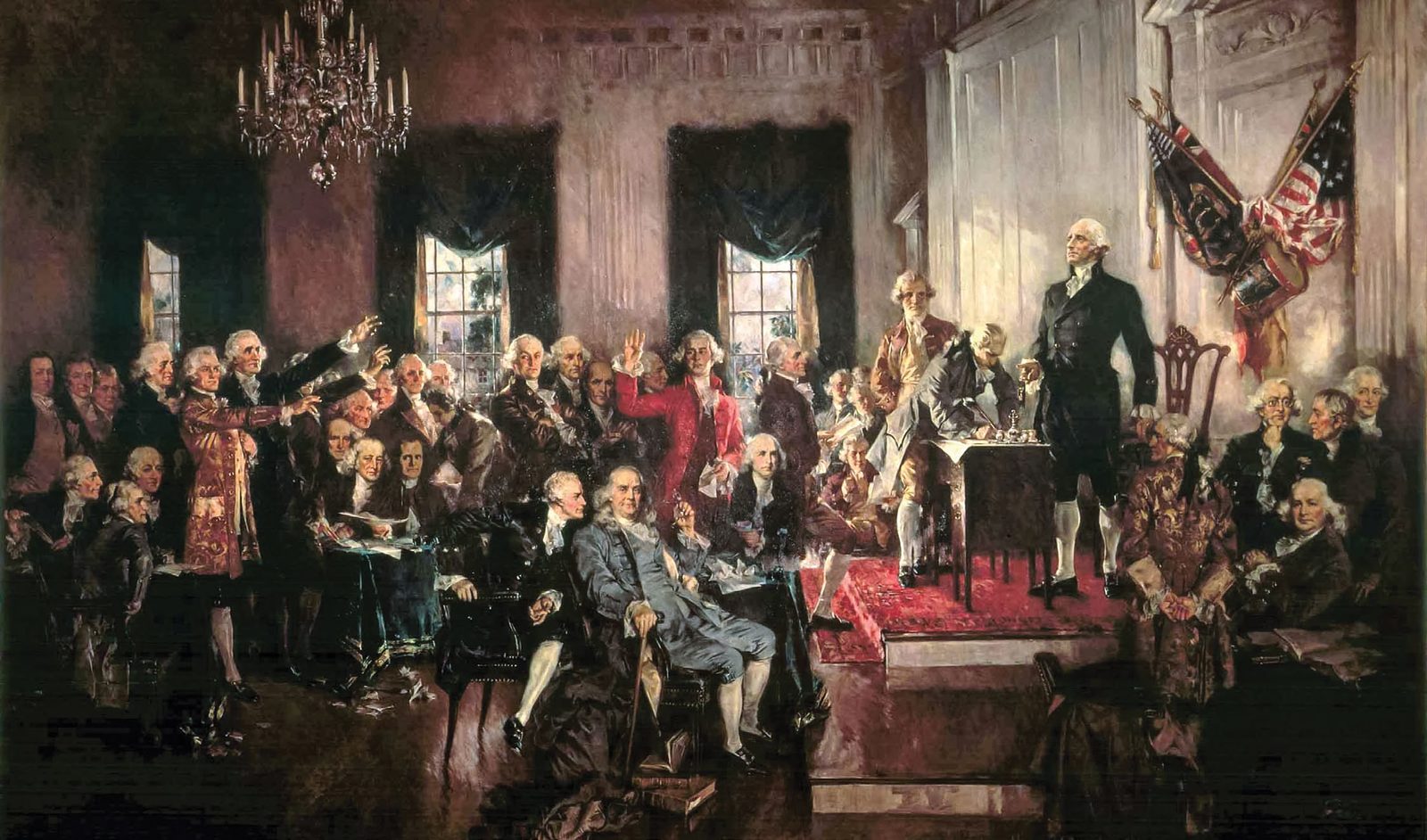
The Constitution was written during the period when the country was created. Another word for created is “founded.” The period when the country was created is called the Founding Era. In 1787, leaders from around the country came to Philadelphia, Pennsylvania, for a Constitutional Convention. They included George Washington, Benjamin Franklin, James Madison, and Alexander Hamilton. The leaders who met at the Constitutional Convention are sometimes called the Founders.
When the Founders wrote the Constitution in 1787, it had a Preamble and seven sections. A change to the Constitution is called an amendment. There are 27 amendments, listed after the seven original sections.
We the People
The beginning of the Constitution is called the Preamble. The Preamble explains why the Founders wrote the Constitution.
The Preamble also says that under the Constitution, the people of the United States will have self-government. This means that the people of the United States are not governed by a king or a queen. Instead, the people govern themselves by electing representatives who serve in local, state, and U.S. government.
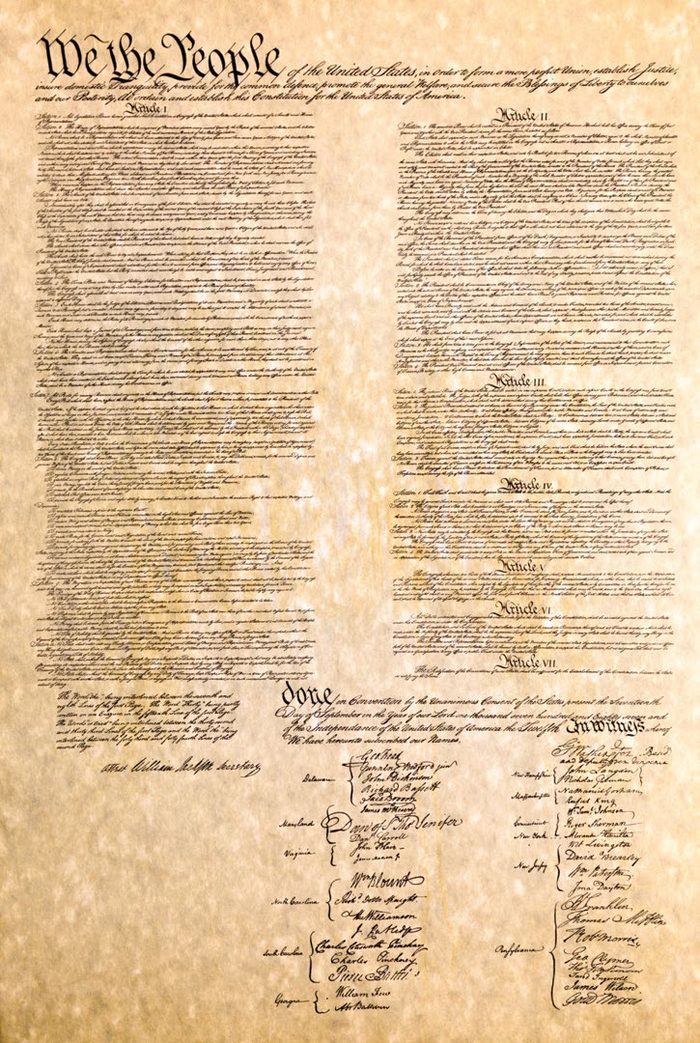
The idea of self-government is in the first three words of the Constitution. Those words are “We the People.”
The three branches of government
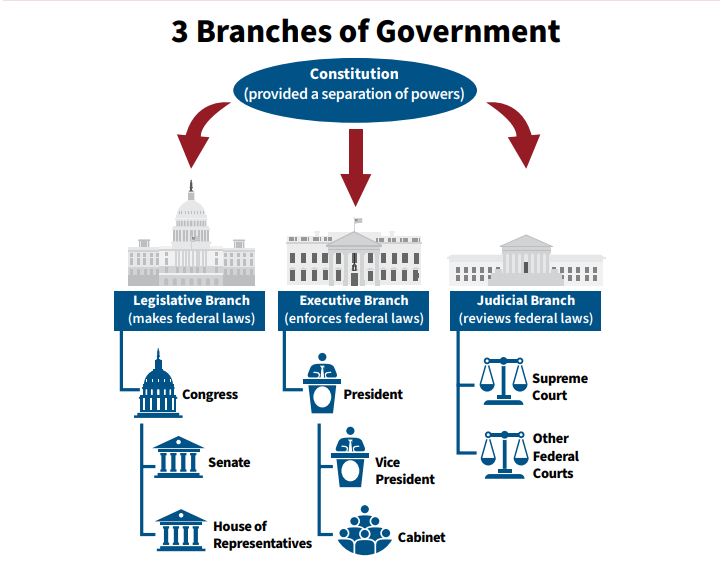
The first three sections of the Constitution set up the U.S. government, which is also called the federal government. They describe three branches:
- Legislative Branch (Congress) — makes federal laws.
- Executive Branch (the President) — enforces federal laws.
- Judicial Branch (the Supreme Court and other federal courts) — reviews federal laws.
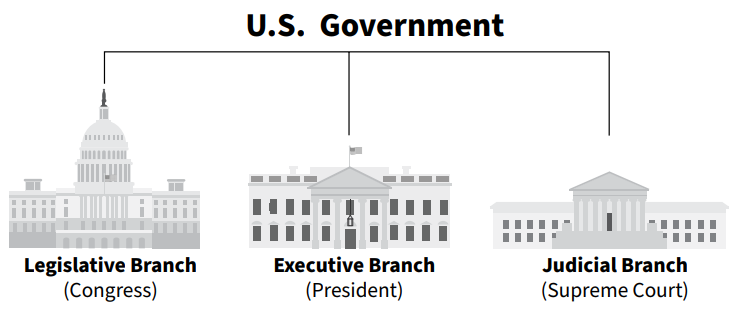
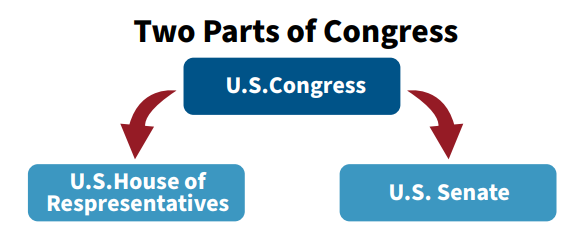
There are two parts to Congress: the House of Representatives and the Senate.
Other parts of the executive branch include the Vice President of the United States, the President’s Cabinet, and the executive departments and agencies. In government, a cabinet is another word for a group of advisors. The President’s Cabinet advises the President.
The parts of the judicial branch are the Supreme Court and other federal courts. The Supreme Court is the highest court in the U.S.
Separation of powers
During the Constitutional Convention, the Founders were afraid that if one person or group had too much power, they could take over the country. They decided to separate the powers of government so that no one person or group could become too powerful. The Constitution gives each branch different powers. This is called separation of powers.
Separation of powers stops one branch from becoming too powerful. Each branch also has ways to check the others, which is why the system is described as checks and balances.
Powers of the federal government
The Constitution lists the powers of the federal government, including the power to protect the people of the United States. For example, the federal government can create an army to defend the nation and declare war if the United States has been attacked or is under threat.
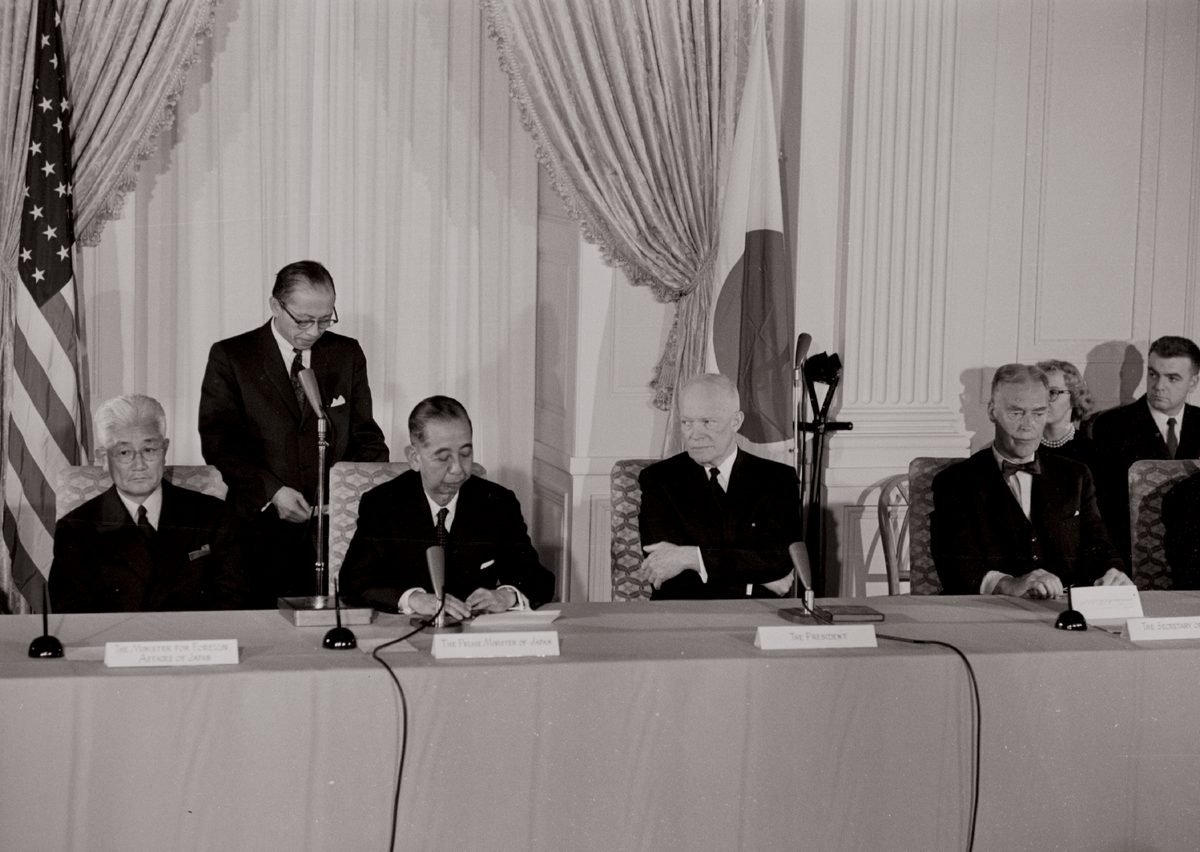
The federal government can also make treaties. A treaty is an agreement between two or more countries. The federal government signs treaties to end wars or conflicts, and to work with other countries on issues such as trade.
Another federal power is printing money. Only the U.S. government has the power to print the dollar bills and coins that people use for money in the United States.
State governments
The fourth section of the Constitution explains how state governments are set up and how new states can join the United States.
Each state has a government with a legislative branch, an executive branch, and a judicial branch. The person in charge of a state’s executive branch is called a governor. Each of the 50 states has a governor. To find out who is the governor of your state now, visit usa.gov/state-governor.
Washington, D.C., does not have a governor because it is not a U.S. state. Washington, D.C., residents should answer that D.C. does not have a governor.
Under the Constitution, powers not delegated to the United States by the Constitution, nor prohibited by it to the states, are reserved to the states or to the people. That is the purpose of the 10th Amendment.
For example, state governments provide the people of their state with protection and safety through police departments and fire departments. States also provide schooling and education. Each state has its own educational system for grade school, colleges and universities, and adult education programs.
Changing the Constitution
The fifth section of the Constitution explains how the Constitution can be changed. A change to the Constitution is called an amendment. The Founders wanted the people of the United States to be able to make changes to the Constitution and the government.
For an amendment to be added, it must be approved by three-fourths of the states. There are 50 states today, so 38 of them must approve an amendment. There are 27 amendments to the Constitution.
The supreme law of the land
The sixth section of the Constitution says the Constitution is the supreme law of the land in the United States. This means that everyone living in the United States must follow the Constitution.
In the United States, we support the rule of law. This means that no one is above the law, and everyone must follow the law. It also means that the U.S. government, state governments, and local governments must follow the Constitution and the rule of law.
Approving the Constitution
The seventh section of the Constitution says that the people of the United States had to approve the Constitution for it to become the law of the land.
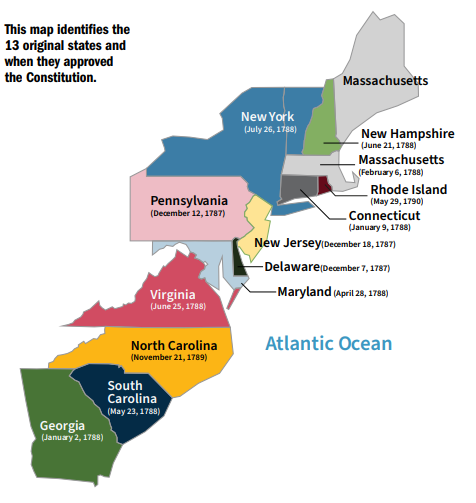
When the Founders wrote the Constitution, there were 13 states. The Constitution said that nine of the 13 original states had to approve it. In 1788, New Hampshire became the ninth state to approve the Constitution, and all 13 original states had approved it by 1790.
The Bill of Rights and later amendments
When the Constitution was written in 1787, it did not list the rights of individuals. Many of the Founders believed that it should include a list of the rights of people living in the United States.
The Founders decided to add 10 amendments to the Constitution. The first 10 amendments are called the Bill of Rights. The Bill of Rights lists some of the basic rights of people living in the United States.
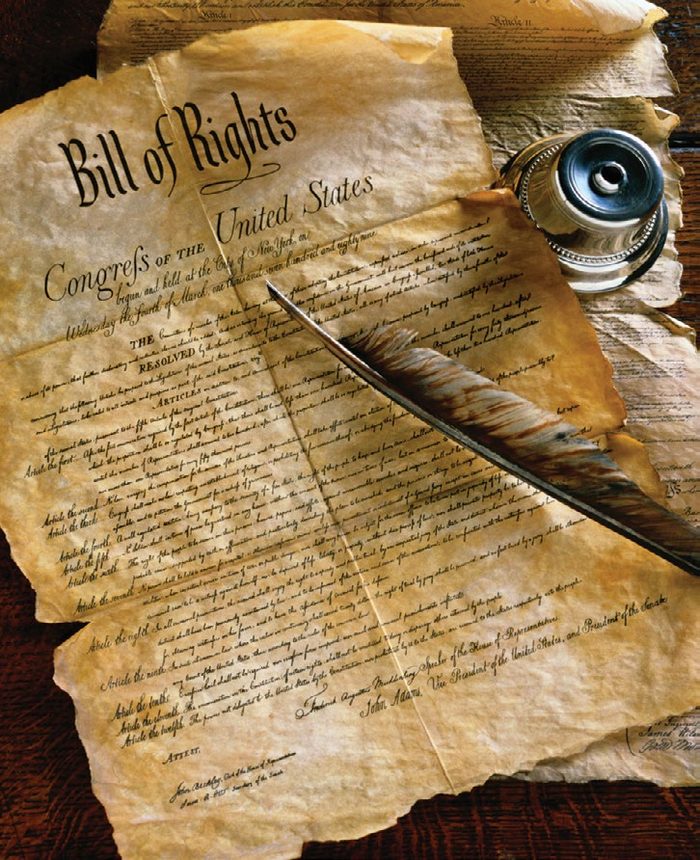
There are 27 amendments. Some of the amendments added after the Bill of Rights describe who can be a U.S. citizen and who can vote in elections in the United States.
What to remember
- The Constitution was written in 1787 and has 27 amendments.
- The first three words, “We the People,” describe self-government.
- The Constitution creates three branches: legislative, executive, and judicial.
- The first 10 amendments are the Bill of Rights.
- Nine of the 13 original states had to approve the Constitution; three-fourths of the states must approve an amendment.
- The Constitution is the supreme law of the land, and no one is above the law.